
Sound Baths, Conscious Awareness, and Everyday Ritual
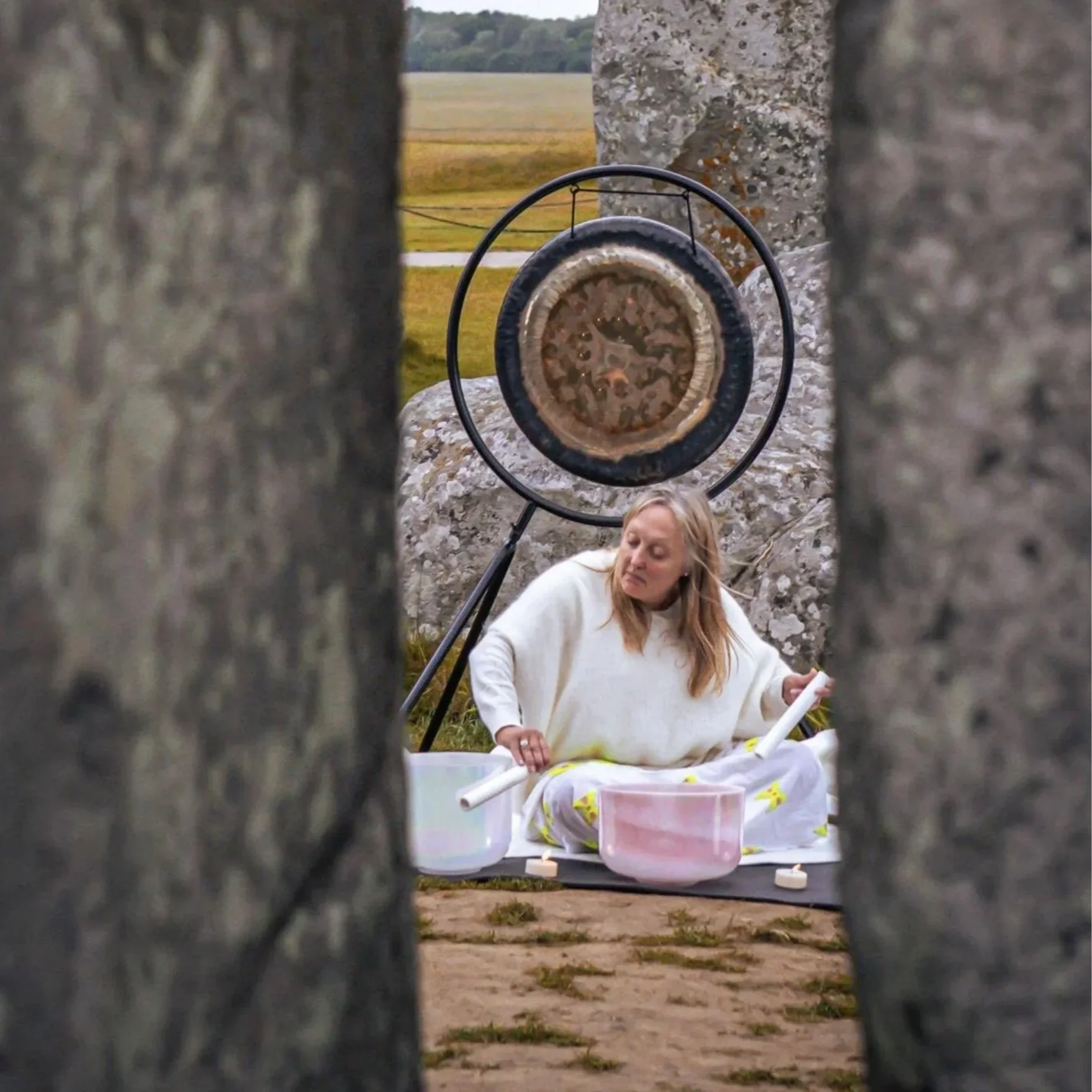
Sophia Barton-Pink
MBACP (Accred) Psychotherapist. Clinical Hypnotherapist. NLP & Quantum Alchemy Practitioner. Moonshack Founder.
An Integrative Approach to Wellbeing
Over two decades of working as a psychotherapist have shown me, consistently, how closely emotional experience is linked to the body. When people are anxious, overwhelmed, or under sustained stress, they often describe feeling stuck in their head. Thinking becomes repetitive and absorbing, while bodily awareness fades into the background. Attention narrows, and internal experience can feel very difficult to shift.
Sound baths emerged in my practice as a response to that pattern – not as a treatment, and not as something that replaces therapeutic or medical care, but as a structured way of helping attention settle and, in doing so, gently changing how we experience ourselves. This is not a wellness trend I came to lightly. It is where my clinical work and my personal history converge.
A note on scope: I draw on my professional training to provide educational context here. This informs Moonshack’s philosophy but is entirely separate from product claims. Our products are not medical treatments and are not intended to diagnose, treat, cure, or prevent any medical condition. Please consult a healthcare professional for medical concerns.
What Happens in a Sound Bath
A session begins simply. We arrive, settle, and I offer a short period of guided attention toward breath and bodily sensation - not as a technique to master, but as a way of helping people transition out of everyday cognitive activity and into a more present form of awareness. I take a moment to explain what the session involves, so that the space feels clear and predictable from the outset.
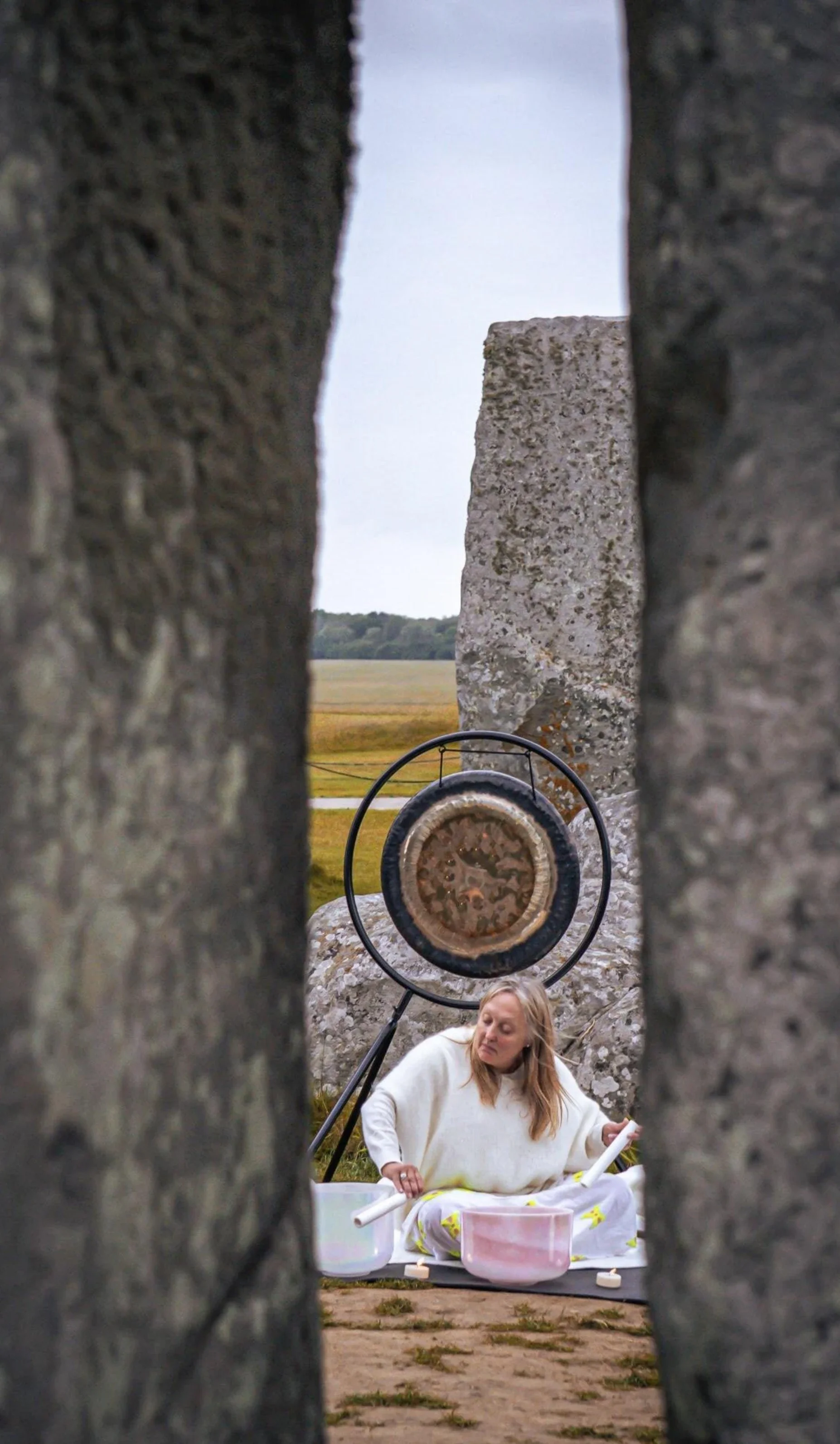
The session is approximately an hour, with the actual Sound Bath lasting around 35 - 40 minutes of the session, of continuous sound, created using instruments including crystal singing bowls and gongs. The sound is sustained, non-lyrical, and not structured around rhythm, language, or narrative. There is nothing to interpret, nothing to perform, and nothing required in response.
Within the sound, I incorporate evidence-based practices to support how attention is directed, including progressive muscle relaxation, the systematic tensing and releasing of muscle groups to bridge the gap between the thinking mind and the felt body, alongside body scanning and gentle guidance around observing thoughts as they arise.
People lie down comfortably and simply listen. What happens from there is shaped by each individual, their state, and the moment they are in. Responses vary widely, and there is no single correct experience. What is consistent is this: people are given permission to pause fully, physically and mentally, in a way that everyday life rarely allows.
Why the Body Matters as Much as the Mind
With over two decades as an accredited psychotherapist, one pattern has consistently emerged: overwhelming emotional states are almost always accompanied by a reduced sense of connection to the body. Anxiety, depression, chronic stress, and low self-worth rarely exist in isolation. They live in the body as much as the mind.
Clinical frameworks in psychophysiology – including Polyvagal Theory, developed by Stephen Porges - describe these as patterns of nervous system response rather than purely cognitive problems. It is worth noting that Polyvagal Theory remains contested in academic neuroscience; I use it here as a clinically influential framework and a useful model rather than settled science. What it does usefully illuminate is the relationship between states of physiological safety and our capacity to engage, regulate, and heal.
Traditional therapeutic approaches primarily engage cognition - identifying thought patterns, reframing beliefs, developing coping strategies. These methods are well evidenced and form the foundation of my own training. But many stress responses and trauma-related patterns operate outside conscious awareness, involving physiological and sensory processes that narrative memory alone cannot fully access. Research in trauma studies, including the work of Bessel van der Kolk, highlights the importance of engaging the body alongside cognition. This is why I integrate sound-based practices alongside talking therapies - not as a departure from evidence-informed care, but as a complementary approach to help expand the container of what we can comfortably feel.
The Physiology of Sound
The instruments I work with, crystal singing bowls, drums, gongs and other Sound Bath tools, create sustained, resonant sound fields that shape attention through continuous auditory stimulation, variation, and silence. Rather than relying on melody or rhythm in a conventional sense, they encourage a form of listening that is steady, immersive, and non-goal-directed.
From a neuroscience perspective, sound is processed through multiple overlapping systems. Auditory pathways register frequency, tone, and spatial qualities, while attentional networks determine what is held in focus and what recedes into the background. At the same time, sound is not only heard but also felt, influencing interoceptive awareness, or the perception of internal bodily states such as breath, tension, and heartbeat. Within this context, there is emerging research in related areas of auditory neuroscience and relaxation physiology suggesting that sustained, low-complexity sound environments may support shifts in autonomic state, particularly reductions in physiological arousal associated with stress. However, research specifically on sound baths as a distinct practice remains limited, and conclusions about direct causal mechanisms should be treated with caution.
One concept often discussed in this area is neural entrainment - the idea that rhythmic sensory input can influence patterns of brain activity. While this is well established in certain controlled experimental contexts, its application to complex, real-world sound experiences such as sound baths is still being explored rather than confirmed.
What is more consistently supported across the wider literature is the relationship between sustained attention to sensory experience, reduced cognitive rumination, and shifts toward calmer physiological states. Many participants describe a subjective movement away from analytical thought and toward a more embodied, present-moment awareness.
In simpler terms, the sound acts like a gentle hook for the mind, giving it something steady to hold onto when thoughts start to whirl.
It is also important to distinguish between direct physiological effects of sound itself and the broader context in which sound is experienced. Factors such as expectation, environment, posture, safety, and the presence of a structured pause all contribute to how the nervous system responds.
In practice, sound baths are best understood as multi-layered experiences in which auditory input interacts with attention, meaning, and context. For this reason, I understand sound baths less as a direct intervention on specific biological systems and more as a structured shift in attention within a carefully held environment.
Any downstream physiological changes are likely to be mediated through these attentional and psychological pathways rather than through sound acting as a precise biological signal with predictable effects.
Note: Downstream psychological changes refer to the subsequent, indirect, or long-term effects on mental health, emotions, or behavior that occur after an initial event, action, or experience.
From Reaction to Response
Much of human behaviour is shaped by habitual patterns that operate automatically and outside conscious awareness. What I observe in sessions is that sound baths offer a structured pause within that process. By directing attention toward present-moment sensory experience, sound, breath, and bodily sensation - they create conditions that support a shift away from continuous cognitive activity.
Sustained attention to present-moment experience is consistently associated in the research with reduced rumination, improved emotional regulation, and increased psychological flexibility. Sound provides an unusually accessible way into that state - it does not require prior experience, a particular belief system, or the ability to sit still. You simply lie down and listen.
Participants often describe a settling of mental activity alongside a heightened awareness of bodily sensation. These effects are not universal. For some, particularly those with heightened sensory sensitivity or certain trauma histories, lying down in a group setting, closing the eyes, or turning attention inward can feel unfamiliar or, at times, activating rather than settling. The caution section later in this article addresses this directly.
Integrating Mindfulness Within Sound
A common misconception I encounter is that the aim of a sound bath is to clear the mind. In reality, cognitive activity continues. The emphasis is on changing the relationship to thoughts - noticing them without immediately engaging, analysing, or reacting. This process, known as decentring, is well established in contemporary therapeutic research and can reduce habitual patterns of rumination and reactivity over time.
I offer all practices within the session as invitations rather than instructions. For those who find turning attention inward uncomfortable - which can be the case for people with certain trauma histories - the sound itself is always available as an external anchor. There is no requirement to follow any particular guidance; simply being present with the sound is enough. When the mind wanders - as it naturally will, I guide attention gently back to sound or bodily sensation. Each return is the practice. It is not a failure; it is the mechanism.
Beyond Physiology: What Else Is at Play
Understanding why sound baths work requires looking beyond physiology. The experience is shaped by multiple interacting processes, and acknowledging that honestly makes for better practice. Attention is central. Sound functions primarily as an anchor - a consistent point of return as the mind settles. Alongside this, learning and conditioning play a role: the more consistently a person pairs the sound bath environment with rest and ease, the more strongly the nervous system begins to associate that context with safety. I see this develop clearly over repeated sessions.
Expectation and meaning also matter significantly. What a person brings into the room - their beliefs, their openness, their history, shapes what they experience, both subjectively and physiologically. This is not a weakness of the practice; it is how most therapeutic contexts work. Context matters too: the predictability of the space, the lighting, the temperature, the presence of others, all of it contributes to whether the nervous system feels safe enough to regulate.
One way to understand a sound bath, then, is as a carefully constructed environment for attentional regulation - one that draws on sensory input, learned association, and expectancy effects to create conditions in which the body and mind can settle. That framing is modest, but it is honest and it is defensible.
The Case for Positive States
There is a well-established relationship between emotional experience and physiological functioning, although the relationship is complex and not one-directional. Sustained stress is associated with measurable changes across multiple bodily systems - including sleep quality, immune function, cardiovascular regulation, and cognitive performance. Much of this research is drawn from psychophysiology and health psychology, where stress is understood as a multi-system process rather than a purely psychological state.
It is important to be precise about what this means. Stress does not act in isolation, nor does it produce uniform outcomes across individuals. The body’s response depends on duration, context, perception, and available recovery periods. It is not stress alone that matters, but the pattern of activation and regulation over time. Positive emotional states - such as calm, safety, connection, and moments of ease - are studied within broader frameworks such as affective science and psychoneuroimmunology. Research in these areas suggests that such states are associated with patterns of physiological activity that differ from chronic stress states, particularly in relation to autonomic balance and stress recovery. These associations are probabilistic rather than deterministic, however, and they do not imply that positive emotions directly cause specific biological outcomes in a simple or linear way.
It is also important to avoid the misconception that positive states are inherently better, or that difficult emotions should be minimised. From a clinical perspective, all emotional states carry information. Anxiety, sadness, frustration, and fear are not problems to be eliminated but signals that can help orient us to internal or external conditions. The aim is not emotional suppression or forced positivity, but flexibility - the ability to experience a range of emotional states without becoming overwhelmed or rigidly fixed in any one pattern. In trauma-informed practice, this is sometimes described as widening the window of tolerance: increasing the capacity to remain present and regulated across a broader range of emotional experience. Practices that support calm and attentional stability are not about avoiding difficulty, but about increasing the system’s ability to recover from it.
Seen in this light, sound baths can be understood as structured opportunities to experience states of reduced cognitive demand and increased sensory awareness. Any physiological shifts that occur are best understood as part of a broader regulatory process involving attention, perception, meaning, and context, rather than as direct or isolated effects of positive emotion alone.
Why Ritual Matters
A single sound bath may create a noticeable shift in experience. What I encourage participants to consider is how to carry something of that into daily life, because without integration, the effects are often temporary. A consistent bedtime routine is a simple example: a repeated sensory cue that, over time, becomes associated with a particular state. The body begins to recognise that this is a place where effort can soften. Behavioural psychology supports this - when the same cue is paired consistently with rest or intentional pause, it reinforces patterns of attention and awareness.
Think of it as a miniature sound bath for your day - small, repeatable moments that bring attention back to the present. Who Should Exercise Caution Every session is structured with trauma-informed principles in mind. Predictability, choice, and a sense of control are built into the experience from the outset, you will always know what to expect, and nothing is ever required of you. That said, there are circumstances where I ask participants not to attend. Please do not come if you:
• Have a pacemaker or implanted electronic medical device • Are in the first trimester of pregnancy • Have recently experienced a concussion or traumatic brain injury
• Are taking medication that significantly affects consciousness
• Experience distressing or acute tinnitus
• Are currently experiencing acute or severe mental health difficulties
If you wear hearing aids, you are very welcome to attend. Please let me know beforehand so I can be mindful of volume and proximity throughout the session.
If you experience migraines, you are welcome to come, but please do so with awareness. The sound environment is generally gentle, but trust your own signals. If any discomfort arises, you are free to step out of the room and rest quietly elsewhere in the building. I ask only that you remain nearby, as I always make time to check in with everyone after the session.
For those currently working through significant trauma in therapy, I recommend discussing participation with your therapist beforehand. Sound-based environments can sometimes facilitate unexpected emotional responses, and having appropriate support in place matters.
Throughout the session, your comfort and safety take priority. You are always free to open your eyes, adjust your position, or ground yourself through the felt sense of the floor beneath you. If you need to leave the room at any point, please do. Please stay in the building. I will always find you afterwards.
What the Evidence Supports
Sound baths and mindful rituals are not substitutes for medical or psychological treatment. For individuals experiencing significant or persistent distress, professional support remains essential. What current evidence does support, drawn from adjacent research in mindfulness, attentional regulation, and the broader psychophysiology of relaxation - is that sensory and attention-based practices of this kind can reduce physiological arousal, interrupt habitual patterns of reactivity, and support present-moment awareness over time.
Sound bath research specifically is still developing. This is the strongest and most honest claim I can make, and I think it is also sufficient. You do not need any prior experience or knowledge to take part. There is nothing to understand, achieve, or perform. You simply arrive, lie down, and listen. What happens from there is shaped by you, your state, and the moment you are in. And what people most often find is not a dramatic change - but a brief return to something quieter, simpler, and more present.
About the Author
My path into this work began with psychotherapy. After training as an accredited counsellor and psychotherapist, I worked for over twenty years within NHS general practices, psychotherapeutic charities, and counselling services, supporting people through anxiety, depression, trauma, and the full range of psychological and emotional challenge.
When my son was born profoundly deaf, something deepened in how I understood the relationship between the body, sound, and communication. I bought drums - not as therapy in any clinical sense, but to help him regulate his emotions, manage the stress and frustration of early life, and to reach him through vibration at a time when he was very young and language was not yet possible. That experience became the quiet foundation beneath everything I have learned since.
When I first encountered alchemy crystal singing bowls, the recognition was immediate, it brought together the four things that have driven my work throughout: healing, education, connection, and communication. I trained as a Level 1 and 2 Quantum Alchemy Crystal Bowls Practitioner, and have since added clinical hypnotherapy, NLP, and a Masterclass in Cognitive Behavioural Therapy for Insomnia (CBT-I) at the University of Oxford to my practice.
Moonshack was founded from that convergence. Every session I offer carries the understanding that sound is not merely heard. It is felt, received, and understood, sometimes in ways that go far beyond words. What I have come to understand, through years of this work, is that sound is not the solution. It is the medium that creates the conditions for attention to soften. And sometimes, that is enough.
This article is provided for educational purposes only and does not constitute medical advice.
2026 Moonshack. All rights reserved